
Heat vs Cold: Why You Need Both
True resilience is forged between heat and cold.

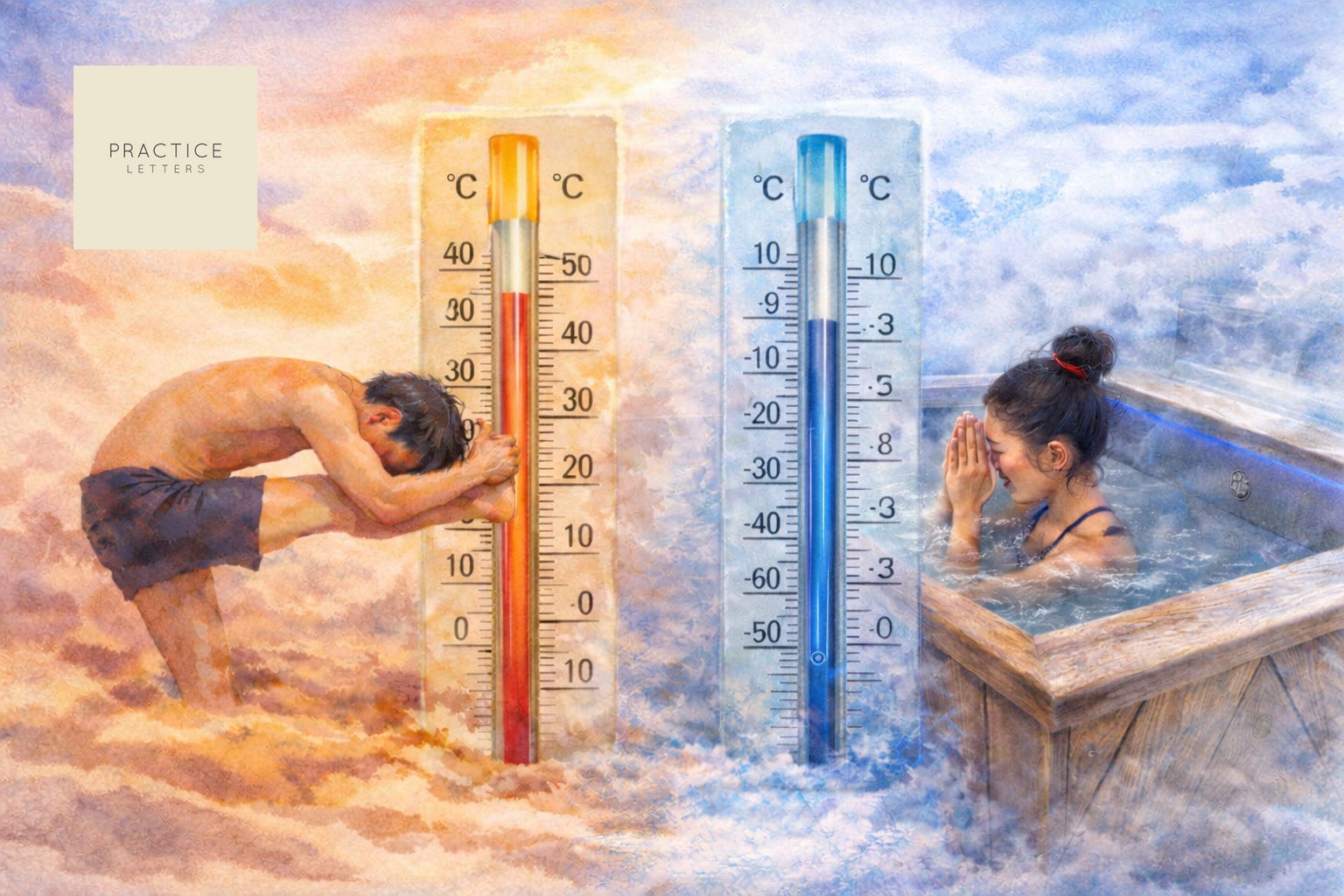
For years, my main teacher was heat.
Ninety minutes in a Bikram Yoga room — around 40°C — where your body sweats relentlessly, your heart rate climbs, and every instinct tells you to step out.
Then later in life, I began exploring the opposite teacher:
cold.
Ice baths where the shock hits instantly. Breathing becomes sharp, muscles tighten, and the mind wants to escape just as quickly as it does in heat — just in a different way.
At first, they seem like opposite experiences.
But the longer I practiced both, the clearer something became:
Heat and cold are training the same skill.
Just through different doors.
Heat teaches you to stay
In heat, the challenge isn’t sudden shock.
It’s accumulation.
Minute after minute, the body gets hotter. Sweat pours. Energy drops. The room feels heavier.
Your mind starts negotiating:
Maybe I should rest.
Maybe I should skip this posture.
Maybe I’ll take it easy today.
The training in heat is learning to stay steady while stress slowly builds.
You regulate breath. You soften tension. You keep showing up posture after posture.
Over time, the body learns:
“I can stay present even when things get uncomfortable.”
That’s resilience.
Cold teaches you to soften
Cold is the opposite pattern.
Instead of gradual buildup, it hits you all at once.
The moment you step into icy water, the nervous system fires:
• Breathing spikes
• Muscles contract
• The mind panics
The training isn’t endurance.
The training is softening into the shock.
You slow the breath.
You relax the shoulders.
You teach the body:
“This intensity is safe.”
When that happens, the nervous system settles surprisingly quickly.
That’s regulation.
In the paid section, we’ll look at:
• Why combining heat and cold accelerates nervous system adaptation
• How the body learns resilience from contrast
• Why extreme stress isn’t the goal — regulation is
• And the simple way I personally combine heat and cold practices
Because the real skill isn’t handling heat.
Or handling cold.
It’s learning how to recover from both.
Practice Letters explores how repetition, discipline, and nervous system training reshape not only the body, but how we meet effort, stress, and change over time.
Paid subscribers support this work and receive deeper reflections on practice each week.
