
The Most Common Ice Bath Mistakes Beginners Make
Why cold exposure often feels harder than it needs to.

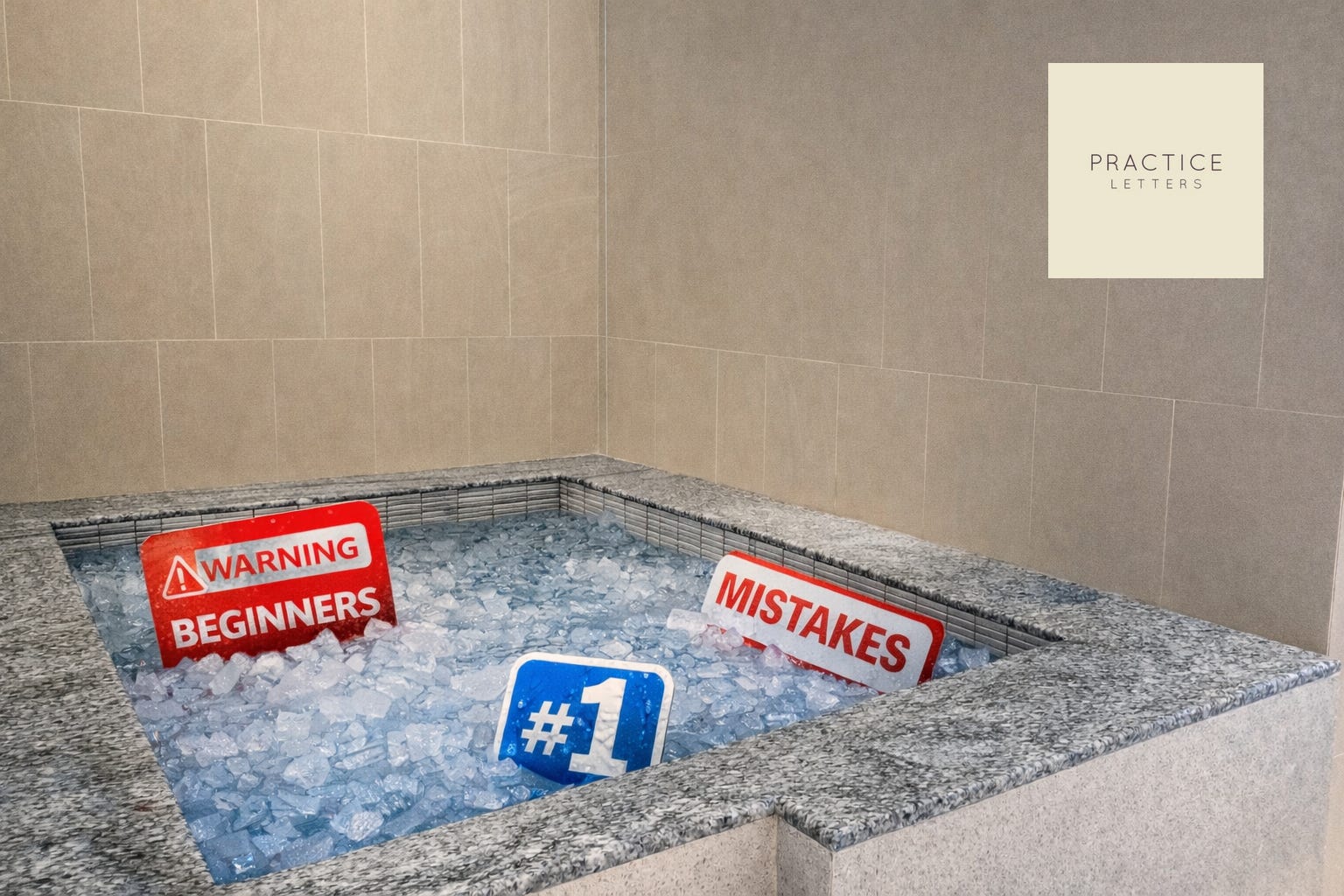
When people start ice baths, most of them assume discomfort is part of the deal.
So they grit their teeth, force themselves through it, and tell themselves they’ll “get used to it.”
Sometimes they do.
But often, what they’re really getting used to is unnecessary suffering — not better adaptation.
Because most beginners don’t struggle with cold itself.
They struggle with a few avoidable mistakes that turn a useful practice into a stressful one.
Cold exposure should leave you feeling clearer, calmer, and more energised afterward.
But when done poorly, people often leave the water feeling shaky, exhausted, or strangely drained.
And that’s usually not because the water was too cold.
It’s because the approach was off.
If you’re curious to experience ice bath contrast therapy for yourself, this might be a good place to start.
Re+ (Recovery Plus) is currently offering a 5-session trial at $75, which makes it easier to explore the benefits without a big commitment.
You can check it out and book here.
The Mistakes That Make Ice Baths Harder Than Necessary
Mistake 1: Treating it like a toughness test
Many people approach ice baths like a challenge to overcome.
How long can I stay?
Can I beat my last time?
Can I outlast my friend?
But cold exposure isn’t a competition. The body doesn’t adapt faster just because you suffer longer.
In fact, pushing too hard often overwhelms the nervous system, making recovery slower instead of better.
The goal isn’t to prove toughness.
It’s to teach the body it can experience intensity and return to calm safely.
Mistake 2: Fighting the breath
The first reaction to cold is almost always breath panic.
Short gasps. Tension. Urge to escape.
Beginners often try to suppress this reaction or ignore it.
But the breath is actually the key signal.
When breathing settles, the nervous system settles.
Cold exposure becomes productive when the breath becomes calm again — not when you simply endure discomfort.
Mistake 3: Staying until numb
Another common mistake is staying in until the body feels numb.
At first, sensation feels intense. Then gradually it dulls.
Some people interpret numbness as progress.
But numbness usually means sensitivity has shut down.
And cold works best when awareness stays sharp, not when sensation disappears.
The goal is regulation, not disconnection.
Mistake 4: Exiting already exhausted
Cold exposure should wake the system up.
But if you leave the water already shivering uncontrollably, mentally drained, or struggling to rewarm, the stress load was probably too high.
Cold training should build resilience, not pile on more fatigue.
When done well, you step out feeling alert and steady — not depleted.
The bigger picture
Most people don’t quit cold exposure because they dislike the cold.
They quit because the experience feels unnecessarily hard.
When cold exposure is approached as awareness training instead of endurance training, the experience changes.
The body adapts faster.
And the practice becomes something sustainable rather than something you have to force yourself to do.
Ironically, when you stop trying to conquer the cold, the cold starts feeling easier anyway.
Next week:
How often should you actually take ice baths — and when can cold exposure start hurting recovery instead of helping it?
🎁 Special Offer
If you’re ready to commit to a regular contrast therapy routine at The Ice Bath Club, you can use the promo code RD339QGKZG via this link to get $25 off your first membership.
Ice, heat, and recovery — open daily from 7am–10pm
No booking required — just walk in when it fits your schedule
Very good advice!! 👍🏻👍🏻. I will try to remember 🩷🩷