
The Things Students Apologise For
That teachers don't care about

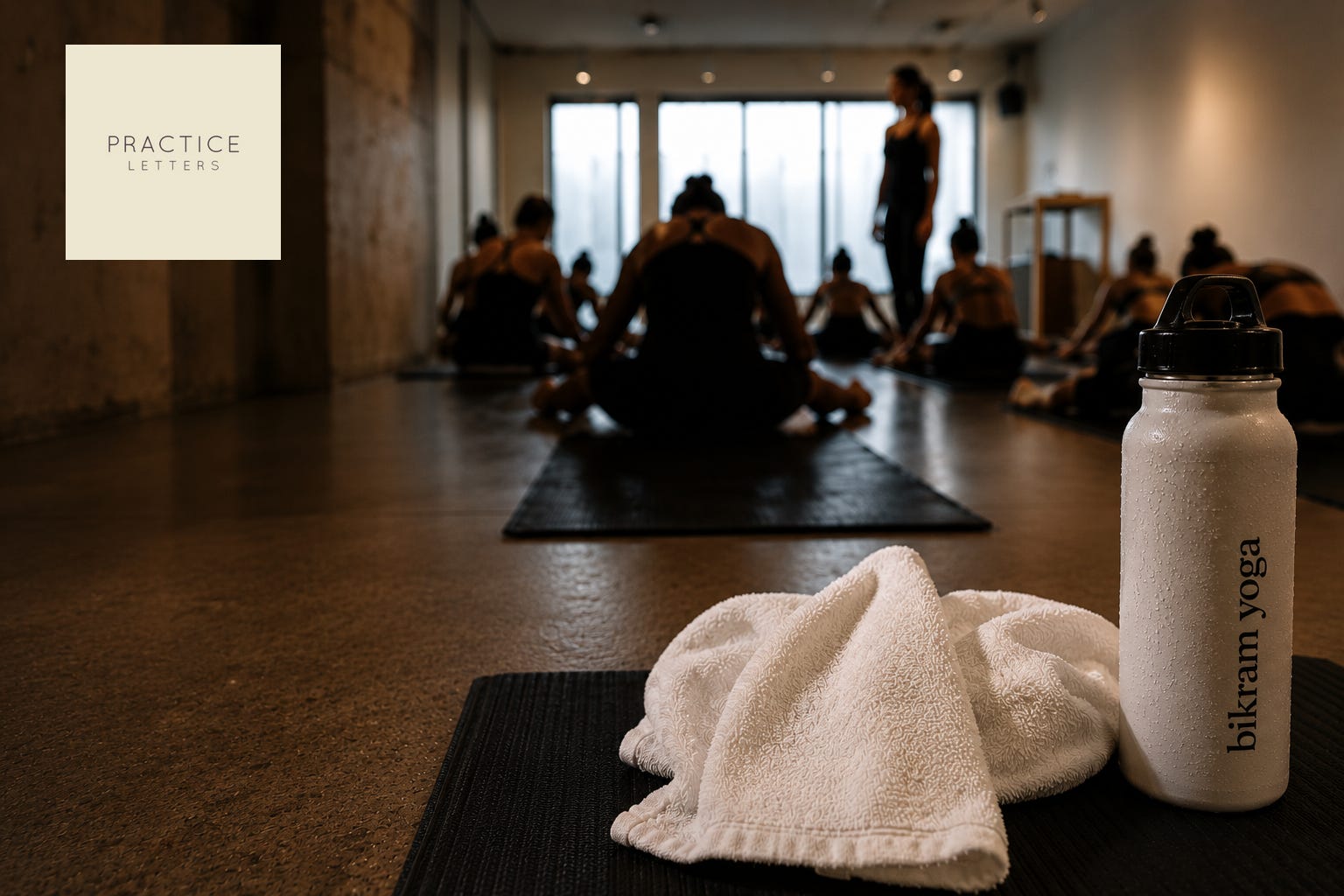
A few years ago, a student came up to me after class looking genuinely upset.
“Sorry, I took so many breaks today.” she said.
I remember looking at her for a moment because I wasn’t entirely sure what she was apologising for.
She had just completed ninety minutes of Bikram Yoga.
In a heated room.
On a day where many people would have happily stayed in bed.
Yet somehow she felt she had let me down because she sat down a few times.
I laughed and told her:
“I don’t even remember how many breaks you took.”
The look on her face suggested she didn’t quite believe me.
But it was true.
Over the years, I’ve noticed students apologise for all sorts of things.
Taking breaks.
Falling out of Standing Head to Knee.
Losing balance in Standing Bow.
Sweating too much.
Not being flexible enough.
Sometimes they apologise before I even have a chance to say hello after class.
And every time, I find myself thinking the same thing:
You’re worrying about the wrong thing.
One student once apologised because she couldn’t touch her forehead to her knee in Standing Separate Leg Stretching.
Meanwhile, I was quietly impressed she had managed to come to class three times that week despite juggling work, family and everything else life was throwing at her.
Another apologised because she kept falling out of Standing Head to Knee.
I remember thinking:
Well, that’s what Standing Head to Knee does.
It humbles all of us.
I’ve been practising for more than a decade.
Some days it still humbles me too.
The funny thing is that students often assume teachers are watching the class very differently from how we actually are.
They think we’re keeping score.
Counting breaks.
Noticing every wobble.
Mentally ranking postures.
We’re not.
At least I’m not.
Most of the time, I’m looking for something else entirely.
And it has very little to do with flexibility.
Keep reading with a paid subscription to discover what Bikram teachers actually notice, the students we remember years later, and why the people who improve the most are rarely the ones you expect.
