
What Actually Happens in the First Minute of an Ice Bath
The cold shock response most people misunderstand.

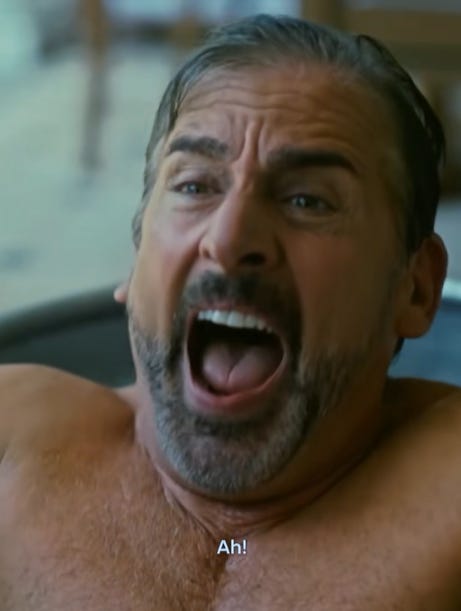
When people talk about ice baths, the conversation usually revolves around endurance.
How long you can stay in.
How cold the water is.
How tough you are mentally.
But the most interesting part of cold exposure actually happens much earlier.
In the first minute.
Because the moment your body enters cold water, a powerful reflex is triggered almost instantly.
It’s called the cold shock response.
And if you’ve ever stepped into an ice bath and suddenly felt your breathing become uncontrollable, your heart racing, and your body wanting to jump out immediately — you’ve experienced it.
This reaction isn’t weakness.
It’s physiology.
The body reacts before the mind does
The cold shock response is automatic.
Within seconds of cold water touching the skin, several things happen at once:
Your breathing rate suddenly increases.
Your heart rate jumps.
Blood vessels near the skin constrict rapidly.
The body is trying to protect itself from heat loss.
Cold exposure forces the body to redirect blood toward the vital organs — the brain, heart, and lungs — while reducing circulation to the extremities.
That’s why hands and feet often feel painfully cold first.
Your body is prioritising survival.
Why breathing becomes chaotic
One of the most noticeable parts of the cold shock response is breathing.
The sudden gasp when entering cold water is a well-documented reflex.
For many people, the breathing becomes rapid and shallow for the first 20–40 seconds.
This is why experienced cold practitioners focus so much on breath control.
Not because breathing techniques are magical.
But because slowing the breath is the fastest way to signal to the nervous system that the situation is manageable.
When the breath settles, the body begins to settle too.
The moment the body adapts
If you stay calm through the initial shock, something interesting happens.
After roughly 30–90 seconds, the intensity of the cold often changes.
The breathing stabilises.
The panic response fades.
The body starts to accept the temperature.
This doesn’t mean the water becomes warm.
It simply means the nervous system has recalibrated.
Your body realises that although the cold is uncomfortable, it is not immediately life-threatening.
And that moment — when the body shifts from panic to adaptation — is one of the most important parts of the experience.
Many people assume ice baths are mainly about mental toughness.
But the cold shock response reveals something deeper about how the body handles stress.
Inside the paid section, I’ll explore:
• Why some people calm down quickly in the cold while others struggle
• What the first minute reveals about your nervous system
• Why fighting the cold often makes the experience worse
• The simple approach I use to move through the cold shock response
Practice Letters explores how repetition, discipline, and nervous system training reshape not only the body, but how we meet effort, stress, and change over time.
Paid subscribers support this work and receive deeper reflections on practice each week.
🎁 Special Offer
If you’re ready to commit to a regular contrast therapy routine at The Ice Bath Club, you can use the promo code RD339QGKZG via this link to get $25 off your first membership.
Ice, heat, and recovery — open daily from 7am–10pm
No booking required — just walk in when it fits your schedule
